Google Analytics Bot Traffic Detection
Spot bot traffic in Google Analytics and trace suspicious sessions back to the campaigns, keywords and paid sources that brought them.
✓ No credit card required · Setup in minutes · Cancel anytime
Seeing bot traffic in Google Analytics is one thing. Knowing where it came from is another. Didva detects bot and invalid sessions and connects them back to the paid campaigns, keywords and sources responsible, so you can act on the source, not just observe the symptom.
Analytics reports show suspicious patterns: odd referrals, spikes of zero-engagement sessions, strange geographies, but rarely tie them to a specific paid source. Without attribution, you can flag bot traffic but can't stop it at the campaign level.
Track → Score → Block → Report → Optimize
A closed loop that turns raw paid clicks into clean, defensible traffic data.
- 1
Track
Capture every paid session and its full source and behavior detail.
- 2
Score
Detect bot, proxy and automation signals across sessions.
- 3
Attribute
Connect suspicious sessions to the campaign, keyword and source behind them.
- 4
Report
See which paid sources generate the most bot traffic.
- 5
Act
Exclude the sources responsible so the pattern stops recurring.
One snippet. No code changes.
Paste the Didva tag on your paid landing pages and it starts scoring clicks straight away.
<script async src="https://app.didva.com/js/ct-click.js" data-site-key="YOUR_SITE_KEY"></script>
Replace YOUR_SITE_KEY
with the key from your dashboard. Add the conversion tag to thank-you pages to keep lead quality clean.
Everything you need to protect paid traffic
Detection, blocking, alerting and clean reporting in one place.
Source attribution
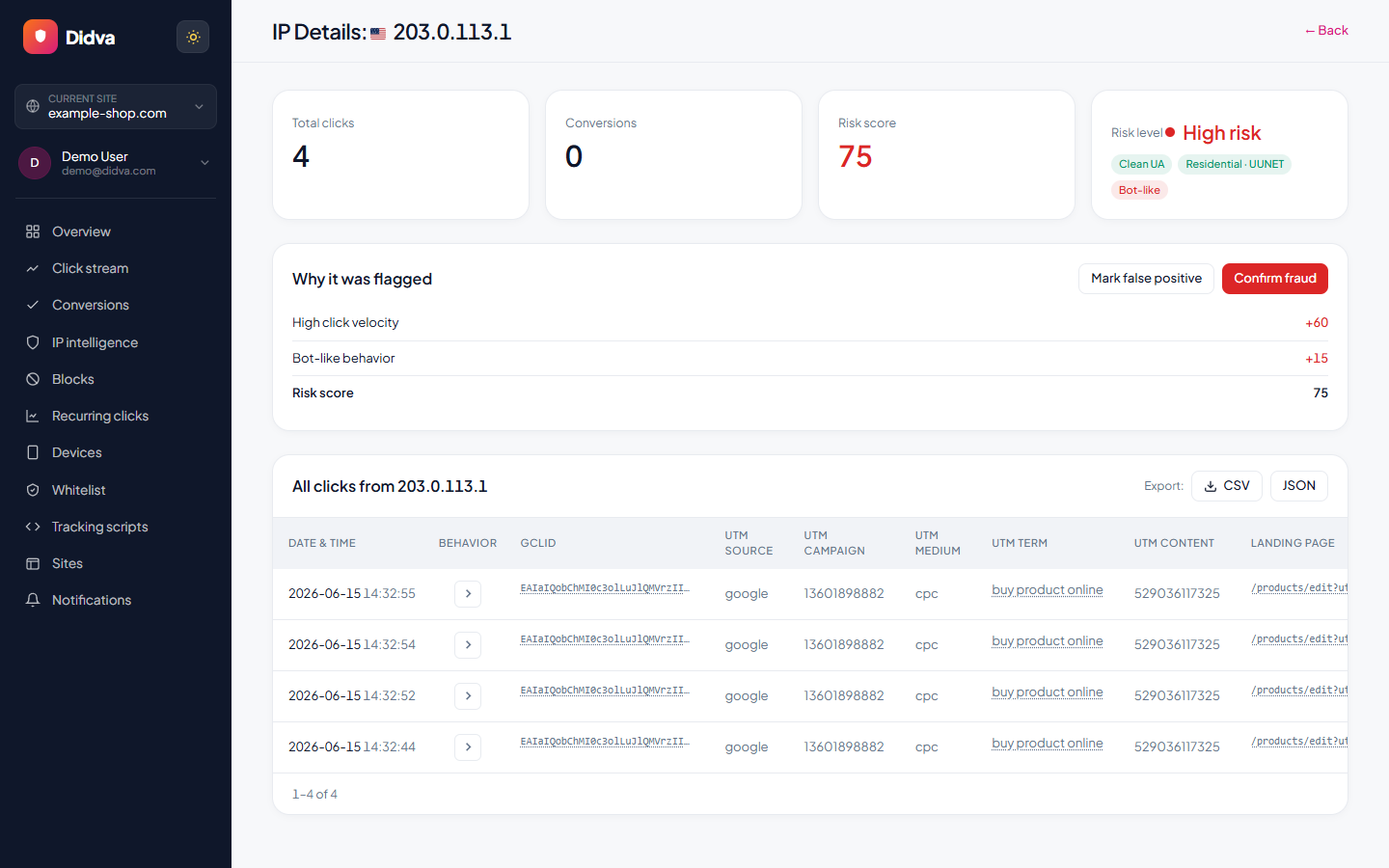
Trace suspicious sessions back to the campaign, keyword and source.
Bot session detection
Identify automated and invalid sessions beyond the known-bot list.
Cleaner analytics
Keep bot sessions from distorting the reports you rely on.
Evidence reports
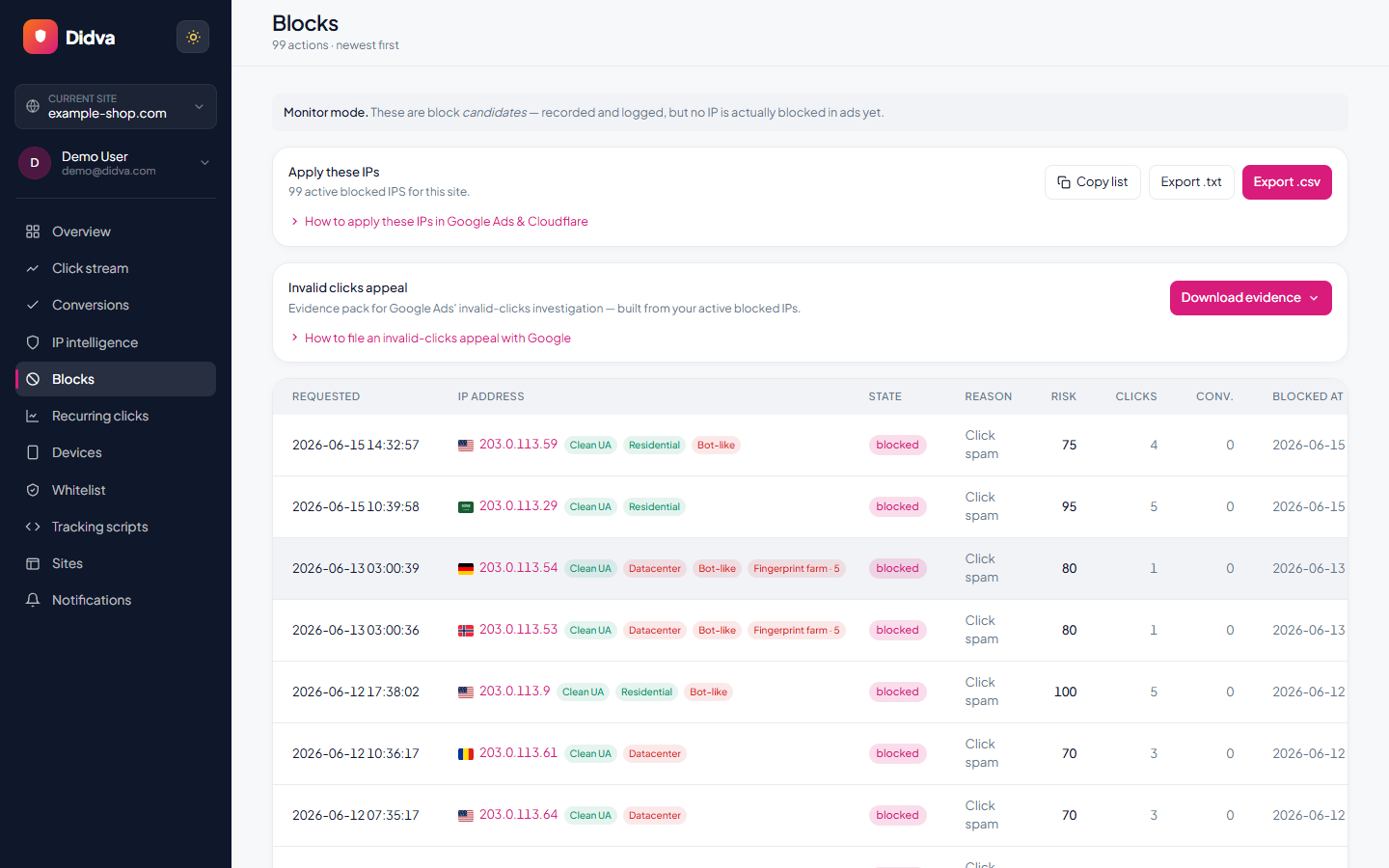
Document suspicious sessions with IPs, timestamps and signals.
Source exclusions
Block the paid sources behind recurring bot traffic.
See Didva in action
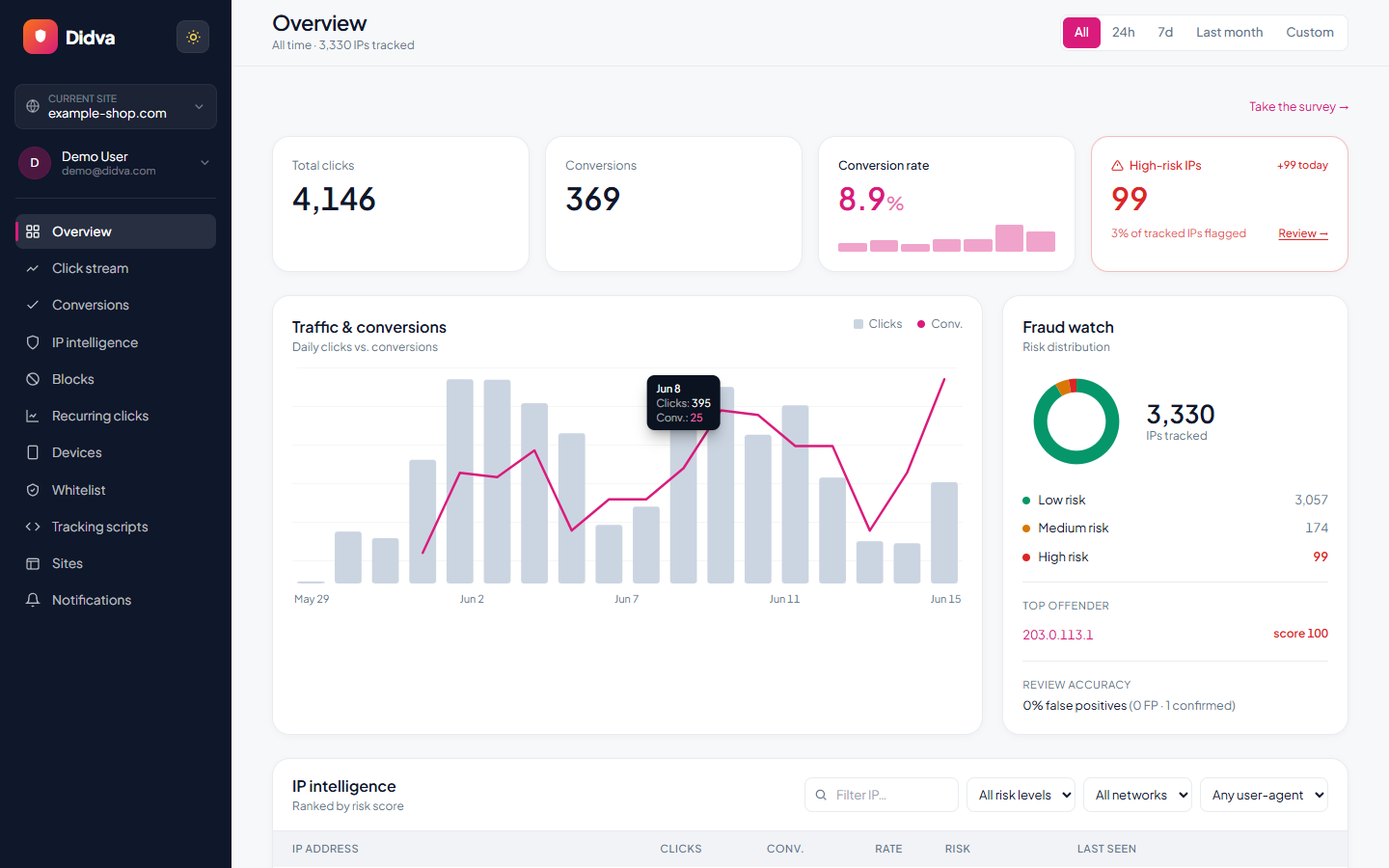
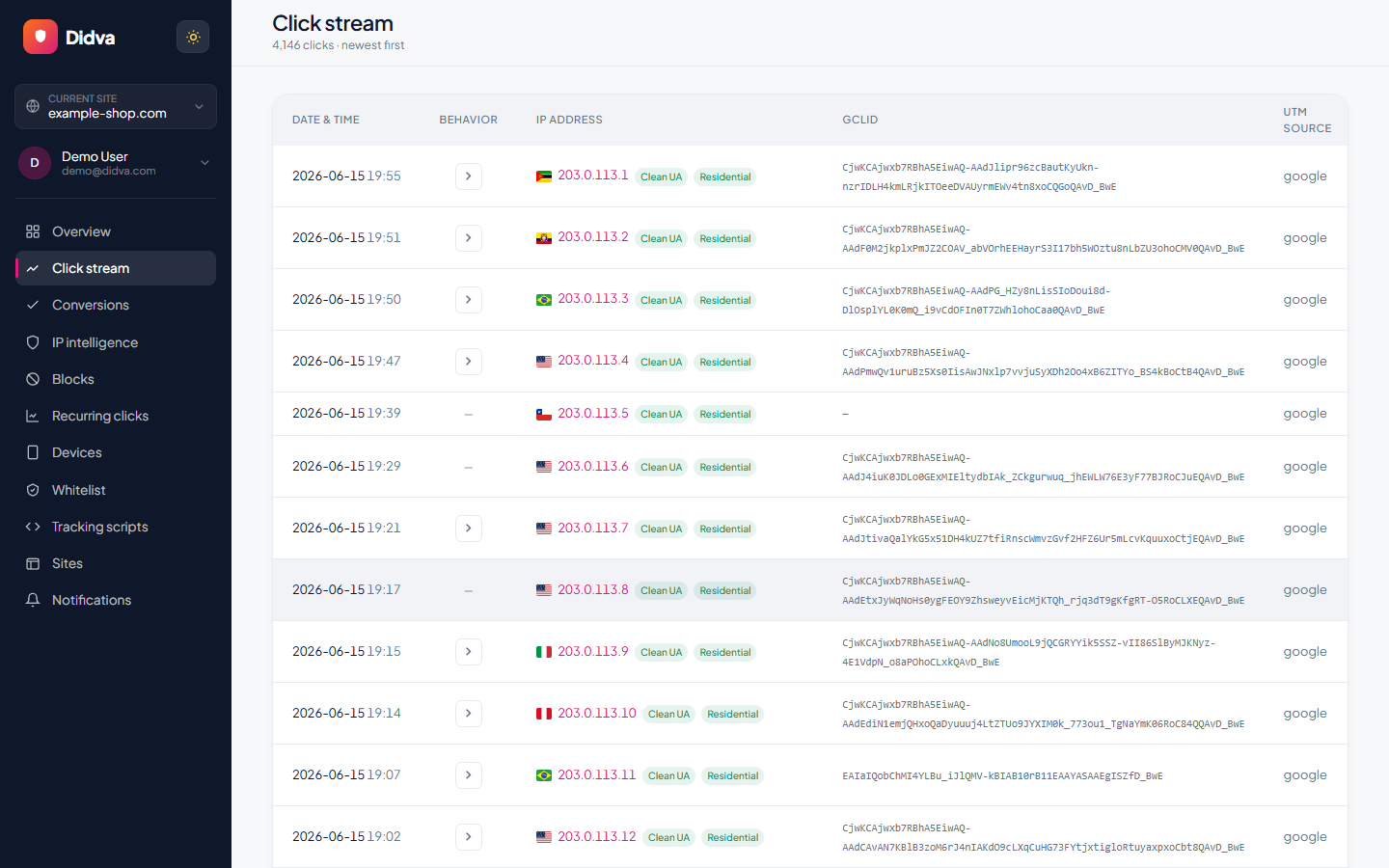
Real-time monitoring, risk scoring and one-click evidence, all in one dashboard.
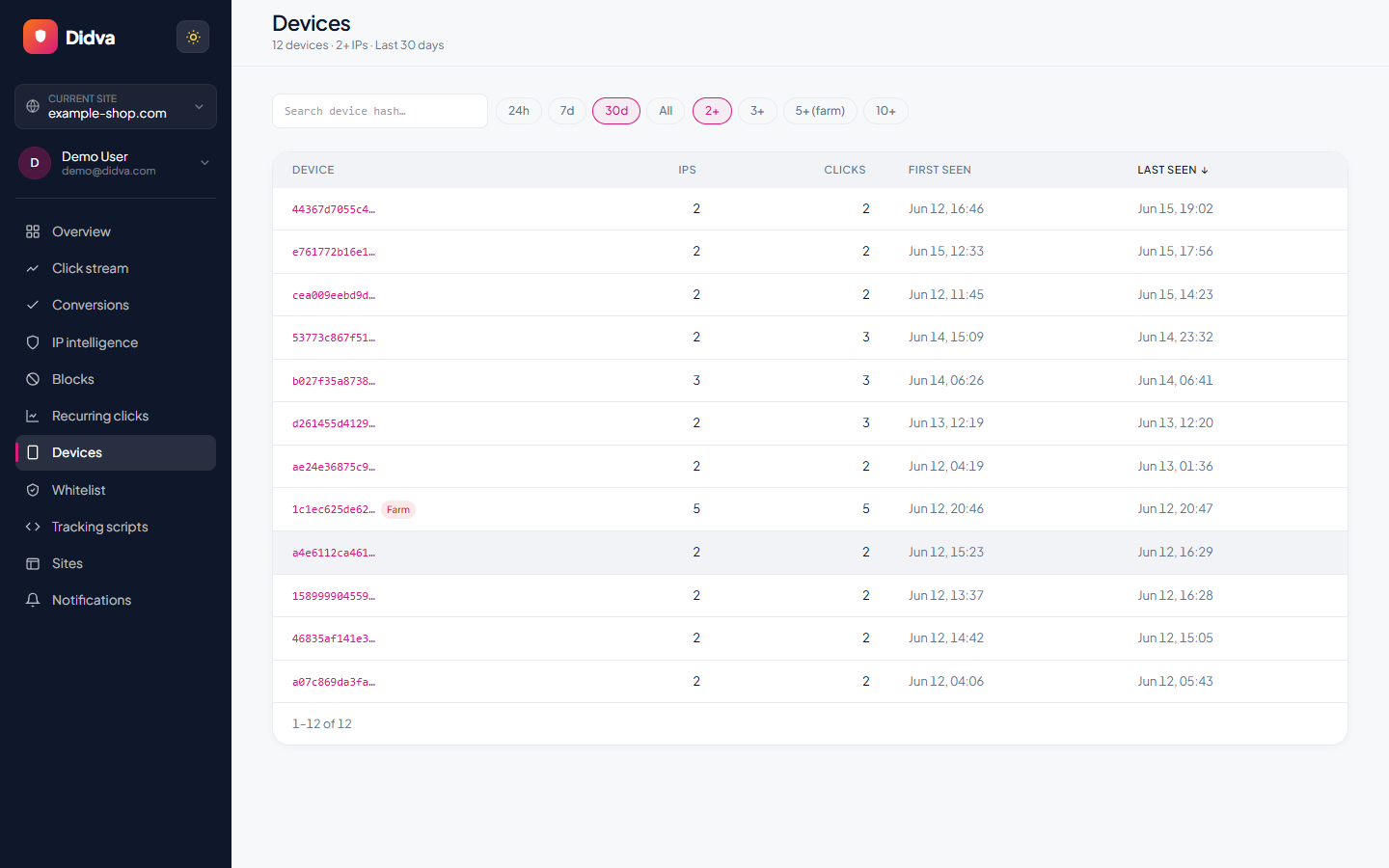
What Didva tracks on every paid visit
Each click is scored against dozens of signals, then tied back to the campaign, keyword and conversion it belongs to.
- Source, medium, campaign, keyword and landing page
- IP address, ISP/ASN and datacenter reputation
- Device, browser and user-agent consistency
- Automation and headless fingerprints
- Session timing, frequency and engagement
- Conversion outcomes by source
- Risk reason, confidence level and recommended action
What advertisers say
Real feedback from teams protecting their paid traffic with Didva.
Caught a click-farm pattern our previous tool missed and cut wasted spend within the first month.
Setup was a single snippet. The evidence export made our Google Ads refund request painless.
Clear per-IP reasons and a review queue so we are not blocking real customers. Exactly what we needed.
Datacenter and repeat-click detection paid for itself fast. Reporting is clear enough to share with clients.
We manage campaigns across several clients and the dashboard quickly highlighted traffic patterns we would have otherwise missed.
Simple setup, useful alerts, and enough detail to investigate suspicious visitors without involving developers.
The product delivered value quickly. I would like a few more filtering options, but the core detection features work well.
The manual review queue helped us avoid blocking legitimate visitors while still dealing with suspicious traffic.
The IP-level evidence makes client conversations much easier. Instead of assumptions, we can show actual data.
One of the cleaner interfaces we have used in the ad fraud space. Reports are easy to understand.
Within the first week we found a source of repeated clicks that had been consuming budget for months.
Useful notifications, clear reasoning, and very little noise. Most flagged visits deserved attention.
We mainly wanted better visibility into traffic quality. The platform delivered exactly that.
I like that every flag includes supporting details. It builds confidence in the decisions being made.
We tested several tools and this was the easiest one to explain to both clients and team members.
Good balance between automation and transparency. Nothing feels hidden behind a black box.
The repeat-click reports helped us identify unusual traffic spikes during a competitor campaign launch.
Client reporting became much easier once we started including the exported traffic quality reports.
Strong product overall. A few advanced reporting features would be nice, but detection accuracy has been solid.
The value was obvious after the first couple of weeks. We now review suspicious traffic as part of our regular workflow.
Ready to see which clicks are real? Start protecting your paid traffic in minutes.
Start Protecting Your AdsFrequently asked questions
How do I find bot traffic in Google Analytics?
Look for spikes of zero-engagement sessions, odd referrals and unusual geographies. To go further, Didva detects bot sessions and ties them back to the paid sources responsible.
Does Google Analytics block all bots?
No. Analytics excludes known bots and spiders but misses sophisticated invalid traffic, which still flows into your reports.
How is this different from GA4 bot filtering?
GA4 bot filtering focuses on isolating bots within your reports; this focuses on detecting bot sessions and attributing them to the paid campaigns and sources that brought them.
Can Didva stop the bot traffic, not just show it?
Yes. Once a source is identified, you can exclude it so the same bot traffic stops reaching your campaigns.
Does Didva replace Google Analytics?
No. Didva complements Analytics by detecting invalid paid traffic and connecting it to its source.
See how much of your traffic is real
Tell us your site and we'll show you where invalid clicks are draining your budget.
Related solutions
Trace bot traffic back to its source.
Didva detects invalid sessions and ties them to the paid campaigns responsible so you can act.